
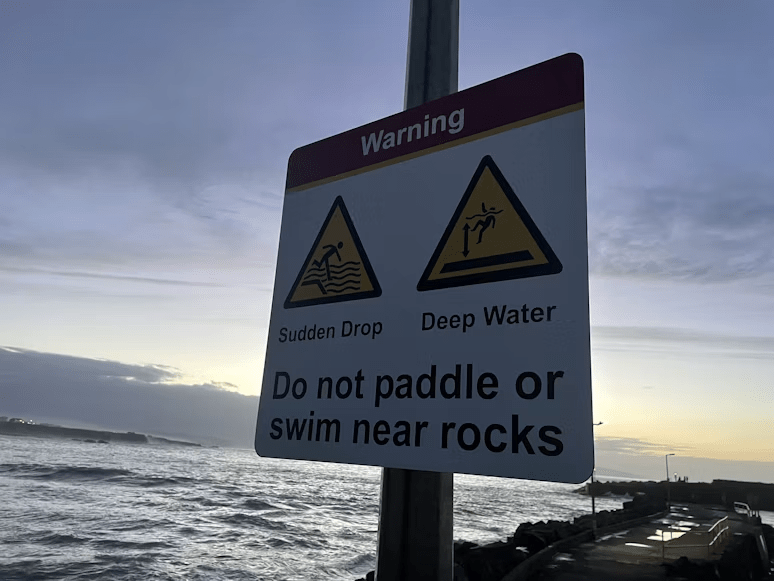
Every day, we see another troubling headline.
Another family struggling to pay bills. Another young person lost to violence. Another business closing. Another community asking why no one stepped in before the problem became a crisis.
For a few minutes, we feel concerned. We may comment, share the story, or talk about it with friends. Then another headline appears, and our attention moves on.
But we must ask ourselves an important question:
Are we paying attention, or are we simply getting used to the warning signs?
Most major problems do not appear overnight. They begin quietly.
A child starts withdrawing from the family.
A neighbor begins falling behind financially.
A community business struggles to survive.
A senior citizen starts choosing between medicine and groceries.
A neighborhood begins accepting crime, abandoned property, and hopelessness as normal.
The signs are often there long before the crisis arrives. The problem is that we sometimes ignore the whispers until they become screams.
We Cannot Keep Looking Away
It is easy to believe that someone else will handle the problem.
We expect elected officials, police officers, teachers, churches, parents, or community leaders to fix everything. Each of them has a responsibility, but real change requires more than one person or one organization.
It requires all of us.
Communities become stronger when people communicate, participate, and care about what happens beyond their own front door.
That does not mean we must solve every problem. It means we must stop believing that our voice, our time, and our actions do not matter.
They do matter.
Small Actions Can Prevent Bigger Problems
A phone call can encourage someone who feels forgotten.
A conversation with a young person can change the direction of a life.
Supporting a local business can help keep someone employed.
Attending a community meeting can bring attention to a neglected problem.
Checking on an elderly neighbor can prevent a tragedy.
Sharing accurate information can help someone make a better decision.
We often underestimate the power of small, consistent actions. But history has repeatedly shown us that meaningful change usually begins with ordinary people deciding that they can no longer remain silent.
The Question Is Not “Who Will Fix It?”
The better question is:
What can I do today?
Can you mentor a young person?
Can you support a struggling family?
Can you report a dangerous condition in your neighborhood?
Can you attend a school, church, or community meeting?
Can you vote in local, state, and national elections?
Can you share information that educates rather than divides?
Can you listen to someone who feels unheard?
We may not have the power to change the entire world, but we can influence the part of the world that is within our reach.
It Is Time to Wake Up
We cannot continue to treat violence, poverty, division, poor leadership, and hopelessness as normal.
We cannot keep scrolling past the problems and then act surprised when they reach our own homes.
The warning signs are all around us.
The question is whether we are willing to recognize them—and whether we have the courage to respond.
Our communities do not need more spectators.
They need people who are willing to stand up, speak out, get involved, and help create solutions.
Read. Share. Join the conversation.
What warning signs are you seeing in your community, and what do you believe we should do about them?
VMGReview.com — Inspire. Inform. Encourage. Empower.
 VMG Review