
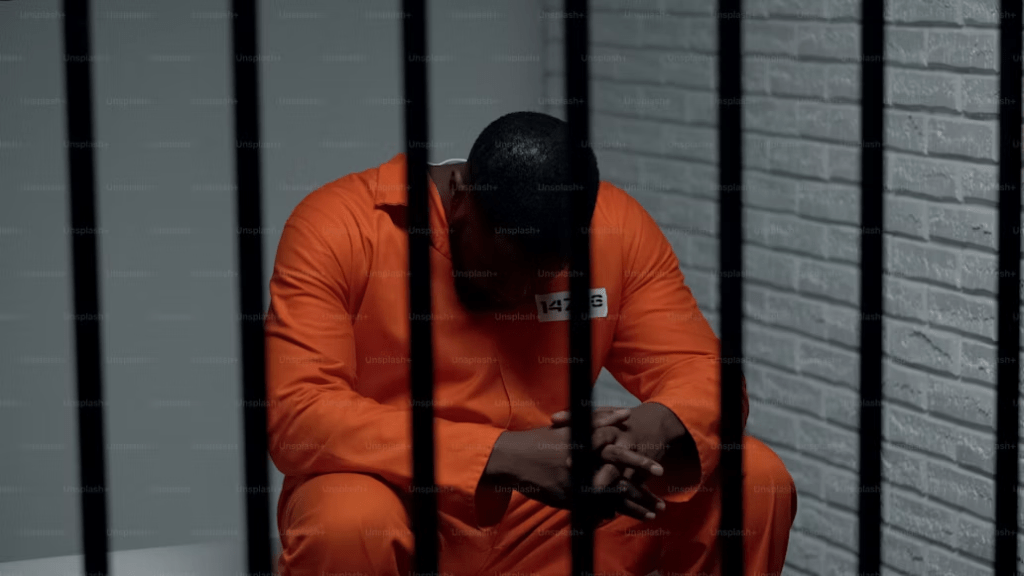
Yes—poverty, limited education, and unemployment all contribute, but research does not point to one single cause explaining why Black men are incarcerated at disproportionately high rates. It is better understood as a combination of economic disadvantage, neighborhood conditions, education, employment opportunities, exposure to crime, policing practices, sentencing policies, and prior involvement with the justice system.
A few findings help put this into perspective. Bureau of Justice Statistics data show that among people in state prison, Black prisoners were less likely than White prisoners to have been employed during the 30 days before arrest—54% compared with 66%. Prison populations also have very low levels of education overall; BJS found that more than 6 in 10 state prisoners had not completed high school in its 2016 inmate profile. These findings suggest that lack of education and stable employment are important risk factors, often connected with poverty.
But poverty alone does not explain the racial difference. Research on racial disparities points to several additional factors, including differences in police contact, enforcement practices, access to legal resources, sentencing policies, and socioeconomic conditions. The Sentencing Project concludes that differences in criminal offending account for some of the disparity, while policing, legal-system practices, and structural inequalities also contribute.
There is also evidence of disparities after a person enters the justice system. In a major federal sentencing study, the U.S. Sentencing Commission found that, after controlling for numerous factors, Black male defendants received prison sentences that were 4.7% longer than White male defendants among defendants who received imprisonment during the period studied.
So if I had to identify the main underlying issue, I would describe it as concentrated socioeconomic disadvantage combined with unequal exposure to the criminal-justice system, rather than simply saying poverty or lack of education.
Think of it as a chain:
Poor neighborhood conditions → weaker schools → fewer job opportunities → economic instability → greater exposure to crime → more police contact → arrest/conviction → difficulty finding employment afterward → increased risk of returning to the system.
Not everyone who is poor, unemployed, or poorly educated commits crime, of course. Those factors increase vulnerability; they do not determine an individual’s behavior.
The disparity itself remains substantial. For example, BJS reported that in 2023 the jail incarceration rate for Black U.S. residents was 552 per 100,000, compared with 155 per 100,000 for White residents, about 3.6 times as high.
For the kind of research question you’re developing, I think there is an even stronger question than “Why do Black men go to prison?”:
“What social, economic, educational, and criminal-justice factors contribute to the disproportionate incarceration of Black men in America?”
That wording would allow us to examine poverty, education, employment, family structure, neighborhood environment, crime, policing, sentencing, and recidivism separately, and determine which factors have the strongest evidence behind them.
Marvin Dixon/Founder
VMGreview.com, Verifacts Investigation, and Fronline Investigator Training Academy.

