
When Political Ads Tell Only Half the Story
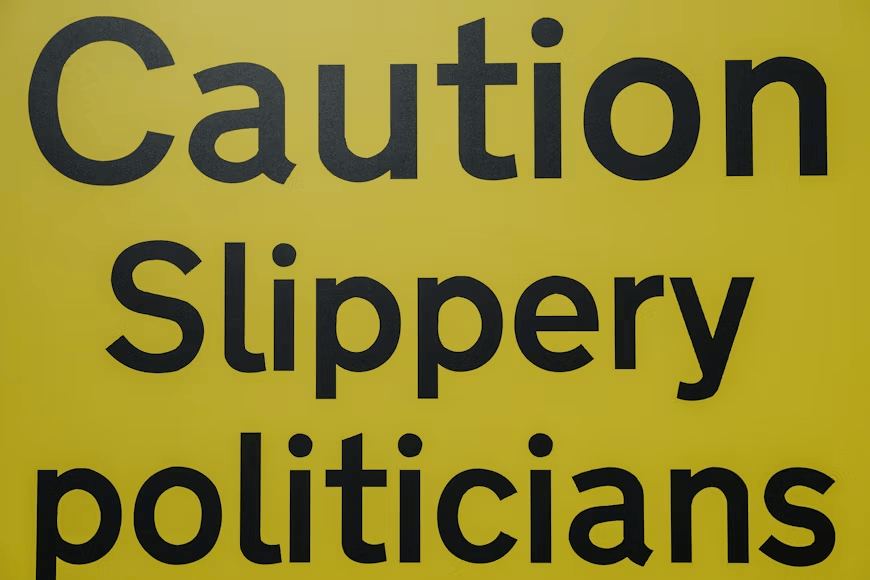
As another election approaches, voters should be deeply concerned about the growing number of negative campaign advertisements.
Both major political parties use negative tactics. Candidates often spend more time attacking their opponents than explaining what they would do to improve our communities. Some advertisements may contain facts, but those facts can be presented without the context necessary to understand the entire story.
A half-truth can be just as misleading as a lie.
When a negative claim is repeated over and over, some people eventually begin to accept it as true—even if they never examine the evidence. Repetition does not make a statement accurate. It only makes it familiar.
Consider a recent campaign advertisement involving former Atlanta Mayor Keisha Lance Bottoms, who is now a candidate for governor of Georgia. The advertisement reportedly suggested that she used taxpayers’ money to purchase her husband’s airline ticket to attend the 2018 Super Bowl.
There was a real incident behind that accusation, but the full story matters.
City funds were improperly used to purchase Derek Bottoms’ airline ticket. However, Bottoms’ office said the city credit card was used by mistake and that the mayor was unaware that it had been used for her husband’s ticket. Records showed that she reimbursed the city $1,434.42 on February 15, 2018—within approximately ten days of the trip and after discovering that the charge had not been placed on a personal credit card. The transaction still represented an improper use of a city credit card, but leaving out the reimbursement and the administration’s explanation creates an incomplete picture. The Atlanta Journal-Constitution, Associated Press
This does not mean voters must accept every explanation offered by a public official. Public officials should be questioned, government spending should be examined, and mistakes involving taxpayers’ money should be taken seriously. However, voters deserve all the relevant facts—not merely the portion that makes an opponent look guilty.
We should apply that same standard to every candidate, regardless of political party.
Before believing or sharing a political advertisement, ask:
- Who paid for the advertisement?
- Is the statement completely true or only partly true?
- What important information has been left out?
- Does a reliable news organization or public record support the allegation?
- Has the candidate’s response been fairly presented?
- Is the advertisement discussing important issues or simply trying to create fear and anger?
We must stop allowing political campaigns to do our thinking for us. An advertisement is designed to persuade—not necessarily to educate. Its purpose may be to influence our emotions before we have an opportunity to examine the evidence.
Every candidate should be held accountable, but accountability must be based on the complete truth.
Democracy works best when citizens investigate claims, compare credible sources and make informed decisions. Whether an attack is directed at a Democrat, Republican or independent, our response should remain the same:
Show us the evidence. Give us the context. Tell us the entire truth.
Do not allow repetition, fear or party loyalty to determine your vote. Study the candidates, examine their records and decide for yourself.
Read. Research. Share. Vote. Join the Conversation.
Marvin Dixon/Founder
VMGreview.com

