
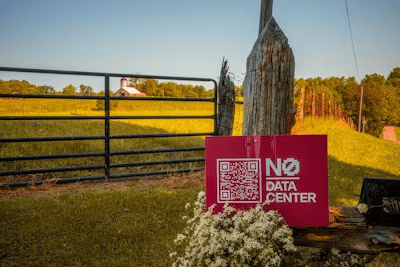
Data Centers Are Coming. Do Communities Have a Voice?
By Marvin Dixon | VMGReview.com
When a data center is proposed near a neighborhood, residents deserve more than an announcement. They deserve clear answers about how the project could affect their homes, public services, utility bills, and daily lives.
Technology continues to advance, but the people who live near these developments must have a meaningful voice in the decisions that shape their communities.
What happens to our water supply?
Residents should know where a proposed facility’s water will come from, how much it is expected to use, and whether that demand could affect the community’s supply. Those answers should be available before a project receives approval.
Who pays—and what is Georgia’s Public Service Commission’s role?
Georgia residents need to understand where the Public Service Commission’s authority starts and ends. The PSC does not approve the construction, location, or operation of data centers. It regulates Georgia Power’s electricity rates and reviews its plans to meet customers’ power needs. It does not set electricity rates for every provider in Georgia.
When additional power plants, substations, transmission lines, and other infrastructure are proposed, residents deserve a clear explanation of who will pay and how those costs could affect their bills.
The PSC has approved protections intended to prevent data center costs from shifting to existing Georgia Power customers. Its January 2025 rule allows special infrastructure charges, longer contracts, and minimum billing requirements for new customers exceeding 100 megawatts.
In December 2025, the PSC also approved an agreement that it says places responsibility for the covered new infrastructure on data centers—or Georgia Power itself, if necessary—rather than existing customers.
But promises of protection must be matched by transparency and accountability. How much are data centers actually paying? How are infrastructure costs being allocated? What happens if anticipated demand fails to materialize? How will residents know whether these protections are working?
You and I deserve understandable answers. Families and small businesses should not be left carrying the financial burden of infrastructure built to serve large technology companies.
What will life look like next door?
Noise is another concern that deserves careful examination. Residents should receive information about anticipated sound levels, operating hours, and measures to protect nearby homes.
Construction traffic, road conditions, and access for emergency vehicles also deserve attention. What improvements will be necessary, and who will be responsible for completing them?
These are reasonable questions from people who care about where they live.
Transparency must come before approval.
Developers and elected officials should explain both the expected benefits and the potential burdens of a proposal. Residents need timely notice of public meetings, access to understandable information, and enough time to review the details.
A public meeting should give people a real opportunity to ask questions and receive answers. Community participation must matter while decisions are still being made.
Promises of economic growth deserve examination. How many permanent jobs are expected? What public costs could accompany the development? What protections will be put in writing, and who will enforce them?
Our communities deserve answers that can be evaluated and commitments that can be followed.
Our voices—and our household budgets—must matter.
Progress should come with careful planning, financial responsibility, and respect for the people affected. Protecting neighborhoods and protecting ratepayers belong in the same conversation. Residents deserve both a meaningful voice before approval and clear evidence afterward that commitments are being honored.
The PSC and Georgia Power should demonstrate through understandable public reporting that financial protections are working. Developers and local officials should explain how promises concerning water, noise, traffic, and neighborhood conditions will be enforced.
Attend meetings. Read the proposals. Ask questions. Speak with your neighbors and elected representatives. Continue paying attention after decisions are made.
Before the next data center is approved, let’s ask the questions, study the answers, and make sure the community’s voice is heard. After approval, let’s demand accountability so that families and small businesses are protected from costs they should not have to bear.
What information—and what enforceable protections—should residents receive before a data center project moves forward?
Read. Share. Join the conversation at VMGReview.com.
Marvin Dixon/Founder
vmgreview.com

